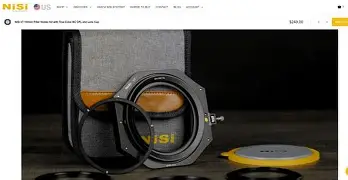
The Real Truth: Akaso 360 or Nisi V7 Filter Kit?
Photographers and videographers often face a choice between buying a new capture device or investing in tools that refine what they already own. The Akaso 360 and the NiSi V7 Filter Kit exemplify that fork in the road: one is an all-in-one 360-degree capture solution that promises immersive footage, the other is a precision filter system built to elevate stills and traditional video from DSLR and mirrorless lenses. This article evaluates both products on real-world performance, practical trade-offs, and typical buyer priorities so readers can decide which investment best serves their creative goals.
Why this comparison matters
On the surface the two products are not direct substitutes — a 360 camera and a filter kit solve different problems. Yet buyers routinely ask whether they should upgrade their capture hardware (for new kinds of footage) or buy optical tools to improve existing gear. The right choice depends less on brand hype and more on use cases: travel vlogging, landscape photography, time-lapse, architectural work, or filmmaking. This analysis focuses on those real-world scenarios and gives actionable guidance for choosing between the Akaso 360 and the NiSi V7 Filter Kit.
Akaso 360 — Product analysis
Overview
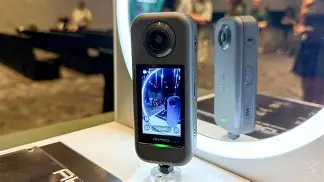
The Akaso 360 is positioned as an accessible entry into immersive video and spherical photography. Cameras in this category are designed to capture nearly everything around the device, giving creators the flexibility to deliver VR-like experiences, reframable footage, and unique perspectives that would be difficult with a single-angle action camera or traditional mirrorless body.
Key features and practical relevance
- Spherical capture: Provides footage that can be reframed in post, allowing the creator to choose perspectives after shooting — useful for run-and-gun travel shooters and event coverage.
- Integrated stabilization: Many 360 cameras include electronic stabilization and stitching algorithms to smooth motion, which matters for handheld or action use.
- Compact form factor: Small, lightweight, and easy to mount on helmets, poles, or tripods — a real plus for travel and adventure shooting where packing space is limited.
- Immediate social formats: Exports to social-friendly aspect ratios and provides immersive formats for platforms that support 360 content.
Real-world performance
In practical use, the Akaso 360 shines when the priority is capturing the environment rather than crafting a single, perfectly composed frame. Event videographers and travel content creators value the freedom to pan and select framing later; this reduces the pressure to get the shot perfectly in-camera. The camera is particularly useful on busy shoots — weddings, cityscapes, or adventure outings — where there is too much happening to predict ahead of time.
Limitations become apparent when pixel-level image quality or low-light performance is paramount. Small sensors and aggressive compression, common in consumer 360 cameras, can struggle with high dynamic range scenes, fine detail, or dim lighting. Additionally, while stabilization and stitching have improved dramatically, visible seams or artifacts can still appear in complex scenes with close objects crossing camera seams.
Who should consider an Akaso 360?
- Creators who want immersive, reframable video without investing in multi-camera rigs.
- Travel vloggers and action sports shooters who need a compact, always-on capture device.
- Event videographers who want coverage from multiple angles without placing multiple cameras.
Akaso 360 — Pros & Cons
- Pros:
- Immersive spherical capture and reframing flexibility.
- Compact and easy to mount; good for travel and action uses.
- Quick setup and simplified workflow for 360 formats.
- Cons:
- Smaller sensor means less low-light performance and less fine detail than larger-sensor cameras.
- Stitching artifacts can occur, especially with nearby subjects crossing seams.
- Less control over depth of field and optical character compared to interchangeable-lens systems.
NiSi V7 Filter Kit — Product analysis
Overview
The NiSi V7 Filter Kit is a modular square filter system aimed at landscape, architecture, and long-exposure photographers who demand control over light entering the lens. Filter kits like the V7 typically include a holder, adapter rings for different lens thread sizes, a circular polarizer (CPL), and slots for neutral density (ND) and graduated ND filters. The emphasis is on optical quality, low vignetting, and mechanical precision.
Key features and practical relevance
- Modularity: Adapter rings mean the same holder can be used on multiple lenses, which is important for photographers with varied glass.
- Multi-slot holder: A multi-slot design accepts multiple filters simultaneously (for example, CPL plus ND) — essential for complex exposures and reflections control.
- Optical quality: High-grade optical glass or resin with multi-coatings reduce color casts, flare, and loss of contrast — crucial for landscape work where tonal subtlety matters.
- Slim profile: Designed to minimize vignetting on wide-angle lenses, a common problem with thicker filter systems.
Real-world performance
For photographers who already own one or more interchangeable-lens cameras, a NiSi V7-style system directly affects final image quality. Graduated NDs allow control of sky-to-foreground exposure differences without heavy-handed post-processing; ND filters make multi-second exposures possible for smoothing water and showing motion; a high-quality CPL reduces reflections and deepens skies. The difference is tangible: better color saturation, cleaner highlights, and more refined long-exposure effects compared to in-camera or software-only workarounds.
Find top-rated Cameras & Photography products at great prices.
See Deals →Practical downsides are part of the workflow trade-off. Using square filters requires more time on location: attaching the holder, rotating and aligning the CPL, and composing with filters in place takes patience. The system also adds weight and occupies space in a kit bag — a consideration for lightweight travel photographers who prioritize mobility.
Who should consider the NiSi V7 Filter Kit?
- Landscape photographers who frequently shoot sunrise, sunset, or high-contrast scenes.
- Architectural and real-estate shooters who need reflection control and precise exposure balance.
- Photographers who want in-camera exposure control for long-exposure and time-lapse work.
NiSi V7 — Pros & Cons
- Pros:
- Optical filters deliver tangible improvements in color, contrast, and exposure control.
- Modular design works across multiple lenses with adapter rings.
- Enables creative long-exposure effects and controlled skies without heavy post-processing.
- Cons:
- Increased setup time in the field and a learning curve for use and stacking filters correctly.
- Added bulk and weight compared with bare-lens shooting — not ideal for ultralight travel.
- Not useful for creators who primarily want immersive or reframable video formats.
Side-by-side comparison
| Aspect | Akaso 360 | NiSi V7 Filter Kit |
|---|---|---|
| Product type | 360-degree action/immersive camera | Modular square filter system for interchangeable lenses |
| Primary use | Immersive video, reframable footage, action/travel capture | Landscape, architecture, long-exposure, reflection control |
| Impact on image | New perspective and workflow; reframing flexibility | Direct optical improvements: color, contrast, exposure control |
| Ease of use | Plug-and-play; minimal setup | Requires setup, alignment, and technique |
| Portability | Very portable and compact | Moderate bulk — holder, adapter rings, and filters |
| Best for | Vloggers, event shooters, immersive content creators | Landscape and architectural photographers who control exposures |
| Typical workflow effect | Adds new creative possibilities and post-reframing choices | Improves in-camera capture; reduces reliance on heavy post-processing |
Buying guide — how to choose
Decide by starting with the fundamental question: what kind of images or footage will most frequently define the user's portfolio or content feed? The right tool aligns to that priority. Below are practical considerations and checklist items to guide the decision.
1. Identify primary creative goals
- If the goal is to create immersive, novel video content — 360 capture enables reframing and new storytelling styles that a filter kit cannot provide.
- If the aim is higher-quality stills, more nuanced color, or longer exposures for landscape work — filters are directly impactful.
2. Consider current gear and ecosystem
Investing in a filter system makes most sense when the buyer already owns one or more lenses that will use the adapter rings. A filter kit amplifies the value of an existing camera system. Conversely, a 360 camera is a standalone purchase that does not depend on lens compatibility, making it easier for someone without a mirrorless or DSLR kit to add a new capability quickly.
3. Evaluate workflow and time on location
Filters require additional setup and deliberation in the field. If a user shoots quick-turnaround content or cannot afford time for precise alignment, the 360 camera’s immediacy might be preferable. On the other hand, planned landscape sessions will benefit from the extra time invested in filters.
4. Assess image quality priorities
- Low-light performance and pixel-level detail favor larger-sensor cameras and traditional lenses paired with filters; a filter kit complements that path.
- For immersive or experiential footage where reframing is more important than pixel-per-inch sharpness, a 360 camera is often acceptable.
5. Portability and travel considerations
Adventure travelers and ultralight shooters should weigh the size and weight of a filter kit versus the compactness of a 360 camera. If every ounce and cubic centimeter matters, a single small 360 device may be more attractive than a multi-piece filter system.
6. Long-term value and learning curve
Filters are a long-term investment for photographers — the knowledge of how to stack filters, use a polarizer properly, or bracket exposures carries into many shoots. A 360 camera introduces a different skill set: shooting for immersive framing and learning how to stitch or edit spherical footage. Buyers should choose the learning curve they are willing to climb.
Shop the latest Cameras & Photography picks on Amazon.
Browse Now →7. Budget alignment
Rather than only comparing sticker prices, consider the complete system cost: adapter rings and multiple filters for the NiSi V7, or accessories and storage solutions for the Akaso 360. Also factor in software needs; 360 footage often benefits from specific stitching or editing tools, while filters reduce post-processing time but may require high-quality RAW capture and color management in post.
Real-world scenarios — quick recommendations
- Weekend landscape photographer: The NiSi V7 delivers immediate improvements for dawn/dusk shots and long exposures; it is the better choice.
- Travel vlogger prioritizing storytelling on the move: The Akaso 360 provides creative angles and reframing flexibility with minimal setup.
- Wedding or event shooter wanting ambient coverage: A 360 camera can capture the full environment unobtrusively; consider it as a complementary tool rather than a replacement for main cameras.
- Architectural photographer focused on reflections and sky control: The NiSi V7’s CPL and graduated NDs are indispensable in many situations.
Maintenance, accessories, and practical tips
Both product types benefit from mindful handling. For the Akaso 360, users should prioritize reliable microSD cards with high sustained write speeds, extra batteries or power banks for long days, and secure mounts to avoid cosmetic damage. For the NiSi V7, keep filters in protective sleeves, clean them carefully with microfibre and blower tools (avoid abrasive rubbing), and store adapter rings and holder hardware to avoid cross-threading.
Workflow tip: photographers who invest in filters should practice composing with filters on before critical shoots — getting comfortable with how a CPL changes reflections and how graduated NDs affect the scene is worthwhile. 360 shooters should learn to keep close objects away from seams and use steady motion to minimize stitching artifacts.
Conclusion
The choice between an Akaso 360 and a NiSi V7 Filter Kit ultimately comes down to intent. The Akaso 360 offers access to immersive perspectives and reframable footage that change what can be captured in a spontaneous, mobile workflow. The NiSi V7 Filter Kit, by contrast, treats the existing lens-and-body system as the platform for optical improvement, giving photographers direct control over exposure, reflections, and long-exposure effects that materially enhance still-image quality.
Buyers should align the decision with their most common shoots: choose the 360 camera to expand creative formats and storytelling methods; choose the filter kit to refine image quality and extend in-camera capabilities for traditional photography. In many studios and on many assignments, these tools are complementary rather than mutually exclusive. Understanding the trade-offs — convenience and novelty versus optical refinement and deliberate technique — allows a more strategic investment that serves the photographic work that matters most to the user.