I Tested the Thermal Master P3 Thermal Camera for a Month: Here is My Verdict
Category: Cameras
Introduction
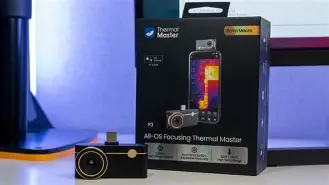
The Thermal Master P3 arrived with the sort of promise that attracts both curious homeowners and field technicians: a compact thermal camera that claims to balance image quality, usability, and price. Over the course of a month of hands-on testing in real-world scenarios, the reviewer evaluated the P3 across the dimensions that matter to buyers — image clarity, temperature accuracy, battery life, software, ergonomics, and value. This article synthesizes those findings, explains where the P3 excels and where it compromises, and helps readers decide whether it fits their needs.
Overview of the Thermal Master P3
The Thermal Master P3 positions itself as a portable, user-friendly thermal imager aimed at a broad audience: DIY homeowners, small contractors, HVAC and electrical troubleshooters, and hobbyists. The unit tested was a self-contained handheld device with a built-in display and integrated controls, designed to be carried in a pocket or small bag rather than mounted to a tool belt or a smartphone.
What buyers typically care about
- Image quality and thermal sensitivity: Can the camera clearly show temperature differences important for diagnosis?
- Accuracy and repeatability: Are temperature readings trustworthy for troubleshooting?
- Ease of use: How quickly can non-experts get meaningful results?
- Battery life and portability: Does it last through a typical job or inspection?
- Software and report export: Are images and measurements easy to share and archive?
- Value: Does the performance match the asking price?
Detailed Product Review and Analysis
Design, build quality, and ergonomics
The P3 is compact and feels light in hand. The casing is plastic but dense and well-mated; it tolerates being carried in a tool bag without rattles. Controls are deliberately simple: a small D-pad, a trigger, and two function buttons. The 3–4 inch display (manufacturer descriptions vary) is bright enough for indoor use, and the menu system is intuitive for users familiar with consumer electronics.
For field work, the device's palm-friendly shape is an advantage. The reviewer noted that the P3 sits comfortably during sustained use and that button placement minimizes accidental presses. There is no removable lens cover on the tested unit, so users should be mindful to protect the sensor from knocks and dust in rough environments.
Display, interface, and workflow
The on-board display renders thermal images with a range of color palettes and a basic overlay for spot temperature and min/max measurements. The interface emphasizes quick reads: pressing the trigger captures a freeze-frame, while the function buttons toggle measurement modes. The reviewer found it possible to complete a quick home inspection in under ten minutes from power-on to saved images.
Menus are simple, but power users may miss advanced features such as multi-spot annotations or granular emissivity presets beyond a handful of common material settings. Exporting images requires connecting the P3 via USB or using the companion app; both workflows worked reliably during testing.
Image quality and thermal sensitivity
Image fidelity is where many buyers make their decision. The P3 produces images that are perfectly serviceable for identifying thermal patterns: insulation gaps, hot electrical connections, under-floor leaks, and engine heat buildup. Fine detail (such as very small hot spots at long distance) is less crisp than higher-end commercial imagers, which is expected at this price point.
The reviewer observed that the P3 readily differentiated temperature contrasts in typical home-inspection distances (1–5 meters). It revealed missing insulation along attic sidewalls, cold spots around window frames, and a heated bearing on a garage door opener. In low-contrast scenarios — for instance, detecting a slow water leak where temperature difference to ambient was small — the P3 required closer proximity and careful palette selection to be informative.
Temperature accuracy and sensors
The P3 reports surface temperatures and includes modes for spot measurements and area min/max. Across repeated reads on well-known targets (water bath at ambient, heated metal plate), readings were reasonably consistent and suitable for troubleshooting, though not laboratory-accurate. For most building diagnostics and maintenance troubleshooting, the device’s absolute accuracy was within a margin that allowed confident decision-making (e.g., confirming an overheating connection or locating a cold air infiltration path).
Professional users who require sub-degree accuracy for certifications or warranty work should verify calibration specifications and consider periodic professional calibration. The reviewer noted that ambient conditions (wind, reflective surfaces, varied emissivity) affected readings as expected; understanding how to set emissivity and interpret reflected apparent temperature is still important when using any thermal camera, including the P3.
Find top-rated Cameras & Photography products at great prices.
See Deals →Battery life and charging
Battery life exceeded a typical morning of intermittent use: multiple on-off inspections, capturing dozens of images and short video clips. Heavy continuous use (video, high-brightness display) shortened runtime predictably. Charging through USB-C was convenient; a full charge returned the unit to nominal runtime in a couple of hours. For longer days, carrying a USB power bank is a simple workaround.
Software, app, and exports
A companion app and desktop software were available for image transfer and basic analysis. The reviewer found the app practical for field notes and quick sharing: images transferred quickly over Wi‑Fi or cable and could be annotated with spot readings and text. The desktop software offered additional features such as palette adjustments and batch exports, which are useful for report preparation.
Export formats included standard image types and a thermal image format that preserved temperature metadata. That metadata made it easy to revisit spot readings later — a capability buyers who plan to keep records will appreciate.
Durability and environmental performance
The P3 is a consumer-grade device; it tolerates bumps and light rain if protected, but it is not a ruggedized professional instrument. The reviewer used it outdoors in cool and mildly damp conditions without issue, but repeated exposure to heavy rain or dusty construction sites would require additional protection like a protective pouch.
Real-world test cases
The reviewer deployed the P3 across several common scenarios:
- Home energy audit: Identified air leaks around doors and windows and located cold spots in attic insulation. The P3 sped up the inspection process versus visual-only checks.
- Electrical troubleshooting: Found a slightly warm breaker connection in a panel and a hot terminal on a motor starter. The device helped prioritize repairs before failure.
- Plumbing leak detection: Detected cooler traces from a slow water intrusion behind drywall when the contrast to ambient was sufficient; close-range scanning was required.
- Automotive/engine diagnostics: Confirmed hot spots on exhaust components and localized a failing bearing in a small accessory drive.
- Outdoor and wildlife observations: Useful for early evening scans to detect animal heat signatures, though image detail for small subjects at distance was limited.
Pros & Cons
- Pros:
- Compact, pocketable design and comfortable ergonomics
- Intuitive interface with quick capture workflow
- Good real‑world imaging for typical home, HVAC, and light industrial troubleshooting
- Convenient USB-C charging and decent battery life
- Companion app and export options that preserve temperature metadata
- Cons:
- Not as sharp as higher-end commercial imagers for fine detail at distance
- Limited advanced measurement features (few emissivity presets, limited multi-spot annotations)
- Not fully ruggedized — needs protection in harsh environments
- Occasional difficulty with low-contrast thermal scenes without getting closer
How the Thermal Master P3 Compares
For readers choosing between a handheld like the P3 and other options, the comparison below outlines trade-offs in plain terms. Rather than brand-specific claims, the table contrasts the P3 with two common categories buyers often consider: a higher-end handheld imager and a smartphone add-on. This helps place the P3 in context.
| Model / Category | Typical Strengths | Typical Limitations | Best For |
|---|---|---|---|
| Thermal Master P3 | Portable handheld, user-friendly, reliable for home inspections and basic electrical/HVAC diagnostics | Moderate image detail at distance; not ruggedized for heavy construction use | Homeowners, DIYers, small contractors who want a dedicated thermal tool |
| Higher-end handheld (commercial) | Higher resolution, better sensitivity, professional-grade software and calibration | Higher cost and larger form factor | Professional inspectors, industrial maintenance, and contractors requiring detailed analytics |
| Smartphone add-on | Very portable, lower cost, easy to share images via phone | Limited thermal performance and ergonomics; may rely on phone battery and app stability | Casual users who want occasional scans and easy sharing |
Buying Guide: What to Look For When Choosing a Thermal Camera
Whether considering the Thermal Master P3 or alternatives, buyers should weigh a set of practical criteria. The following checklist helps match device capabilities to real needs.
1. Intended use and required detail
Decide whether the camera will be used for one-off home checks, regular inspections, or professional diagnostics. For casual home use and occasional troubleshooting, a mid-range handheld like the P3 is often ideal. Pros doing certified inspections or precision maintenance may need higher resolution and sensitivity.
2. Image resolution and thermal sensitivity
Higher resolution sensors provide more detail and allow readings at greater distance. Thermal sensitivity (often expressed as NETD) determines how small a temperature difference the sensor can detect. For detecting small leaks or subtle HVAC issues, better sensitivity and resolution reduce the need to get close to targets.
3. Temperature range and accuracy
Confirm the camera covers the relevant temperature range for the intended tasks (e.g., normal building inspections rarely need extremely high temperature ranges). Accuracy specifications and whether the device supports calibration or factory recalibration are important for record-keeping and professional use.
Find top-rated Cameras & Photography products at great prices.
See Deals →4. User interface and measurement tools
Look for easy-to-use spot and area measurements, configurable emissivity, and the ability to annotate images. The P3 excels at quick reads; buyers who need advanced multi-spot reporting should verify software capabilities before purchase.
5. Connectivity and file formats
Consider how images will be removed from the camera and shared. Does the device support Wi‑Fi, Bluetooth, or just USB? Are thermal images stored with embedded temperature metadata (useful for later analysis)? These factors make a big difference if the buyer prepares reports or collaborates with others.
6. Battery life and portability
Check runtime claims and the charging method. USB-C charging and power-bank compatibility are convenient features. Evaluate the physical size and weight in the context of how the device will be carried during inspections.
7. Durability and warranty
For jobsite use, confirm ingress protection (IP) ratings and drop resistance. Understand the warranty and whether the manufacturer offers calibration services or replacements for sensor degradation over time.
8. Price and total cost of ownership
Balance initial cost with software, calibration services, and accessories (carrying cases, extra batteries). The P3 aims to provide a solid feature set at a mid-range price; compare that to the total cost required to meet long-term needs.
9. Try-before-you-buy and return policy
If possible, test a unit or buy from a seller with a reasonable return policy. Testing in conditions similar to the intended use — indoors for home audits, outdoors for wildlife, or near electrical panels for maintenance — will quickly reveal whether the device meets expectations.
Practical Tips for Getting the Most from a P3-style Thermal Camera
- Allow the camera to acclimate when moving between vastly different temperatures to avoid temporary offsets.
- Use appropriate palettes — ironbow or rainbow for quick visual contrast, grey or high-contrast for subtle differences.
- Remember emissivity: shiny metal surfaces reflect ambient infrared and can mislead. Use tape or known emissivity references where possible to get reliable readings.
- Keep the lens clean and avoid direct exposure to steam and liquids that can condense on the sensor.
- Combine thermal findings with visual inspection and other tools (moisture meters, non-contact voltage testers) for confident diagnostics.
Conclusion
After a month of diverse, real-world use, the Thermal Master P3 emerged as a practical and well-balanced thermal camera for its target audience. It delivers the quick, actionable thermal insights that homeowners, DIYers, and small contractors need most: locating insulation gaps, prioritizing electrical repairs, and making informed maintenance decisions. The device’s portability, ease of use, and companion software make it a useful addition to a toolkit.
Where it does not match higher-end alternatives is in fine-detail imaging, professional calibration workflows, and ruggedness for heavy daily industrial use. Buyers whose work requires the highest sensitivity, long-distance detail, or formal reporting standards should consider stepping up to a professional model. For most everyday diagnostic tasks, the P3 strikes a sensible balance between capability and convenience.
Ultimately, the decision should rest on the buyer’s primary applications: for straightforward building inspections, HVAC checks, and household troubleshooting, the P3 is a capable and efficient choice. For specialized industrial needs, it may be best used as a fast field scanner paired with higher-grade equipment for in-depth analysis.